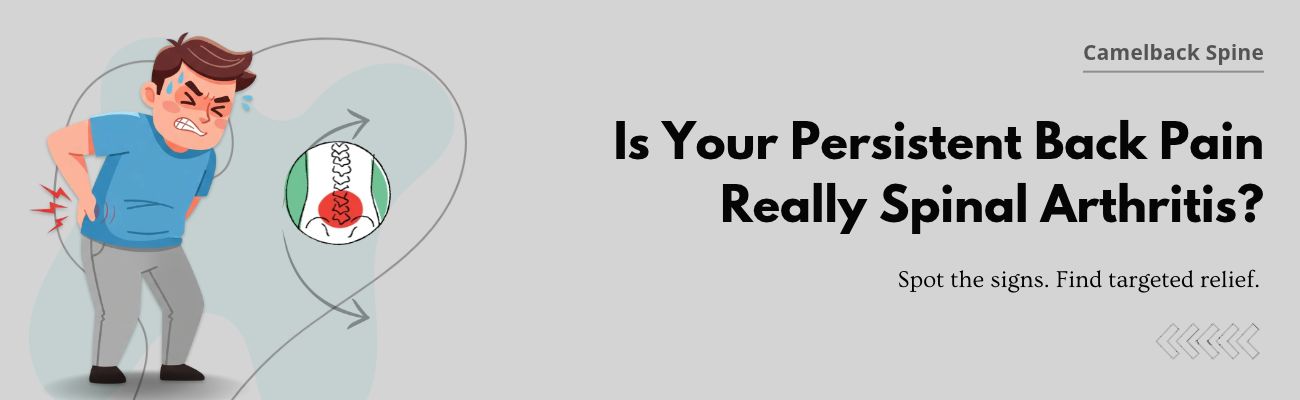
What Is Spinal Arthritis and How Does Facet Joint Inflammation Develop?
How Arthritis in the Spine Differs From Other Joint Arthritis
- Many joints work together: Each spinal level has two facet joints plus a disc, so several structures can wear down at once.
- Nerves are close by: Bone spurs and swollen joints can crowd nearby nerves, causing leg or arm symptoms that never occur with knee arthritis.
- Pain can travel: Irritated facet joints may send pain into the buttocks, hips, or thighs, or into the shoulders and head when the neck is involved.
- Movement matters: Spinal joint pain often changes with position, getting worse when you arch backward or twist.
Signs of Facet Joint Inflammation That Set It Apart From Back Aches
- Stiffness that is worst after waking or after sitting for a while, then eases with gentle movement
- Pain that increases when you lean backward, twist, or stand for long periods
- A deep, dull ache on one or both sides of the spine rather than a sharp, pinpoint spot
- Pain that returns repeatedly in the same area over months
- Relief when you lean forward, such as over a shopping cart
When Lower Back Pain Means It Is Time to See a Spine Specialist
Self care is reasonable for a short flare. See a spine specialist if your pain lasts longer than a few weeks, keeps coming back, wakes you at night, or interferes with work and sleep.
Seek urgent care right away if back pain comes with numbness in the groin area, loss of bladder or bowel control, rapidly worsening leg weakness, fever, or pain after a serious fall or accident. These can signal problems that should not wait.
A specialist will usually review your history, examine your movement and strength, and may order an X-ray or MRI. Keep in mind that imaging findings must be matched to your symptoms, because many people have arthritis changes on scans without any pain.
How Facet Joint Injections Work With a Medial Branch Block
- Facet joint injections place numbing medicine, often combined with a corticosteroid, directly into or around the painful joint under imaging guidance. If your pain drops quickly, that suggests the joint is a source of your symptoms. The steroid may reduce inflammation and provide relief for weeks or months, though results vary from person to person.
- A medial branch block is a diagnostic step. It numbs the tiny nerves that carry pain signals from the facet joint. If your pain improves meaningfully for the duration of the anesthetic, that is strong evidence the joint is the problem, and it helps identify who is likely to benefit from a longer lasting option.
How Radiofrequency Ablation Works for Facet Joint Pain Relief
Radiofrequency ablation uses heat from radio waves to disrupt the small nerves that send pain signals from an arthritic facet joint. It does not repair the joint or cure arthritis. Instead, it quiets the pain messages traveling to your brain.
Candidates are typically people whose pain has lasted for months, has not improved enough with exercise, therapy, or medication, and who have had clear but temporary relief from medial branch blocks. Relief often lasts from several months to a year or longer, and because nerves can slowly regrow, the procedure can often be repeated if pain returns. Not everyone responds, and it is not the right choice for every type of back pain, especially pain driven mainly by a pinched nerve or a large disc problem.
Daily Nonsurgical Habits That Ease Spinal Joint Pain
- Stay active: Walking, swimming, and gentle stretching keep joints lubricated and muscles supportive.
- Strengthen your core: A strong trunk reduces the load on facet joints.
- Mind your posture: Avoid long periods of arching backward or slouching, and change positions often.
- Use heat or ice: Heat can ease morning stiffness, while ice may calm a flare.
- Consider over the counter medicines: NSAIDs help some people, but check with your doctor first, especially if you have stomach, kidney, or heart concerns.
- Manage your weight: Less body weight means less stress on spinal joints.
Book Your Arthritis Evaluation at Camelback Spine Care in Arizona
FAQs:
1. What is spinal arthritis?
Spinal arthritis is wear and inflammation in the joints of the spine, most often osteoarthritis of the facet joints. Over time, cartilage thins and bone spurs may form, causing stiffness, aching, and sometimes nerve irritation. It can affect the neck, mid back, or lower back.2. How do I know if my back pain is from the facet joints?
Facet joint pain often feels like a deep, dull ache that worsens when you lean backward or twist, and stiffness that is worse after rest. Only a medical evaluation, sometimes with a diagnostic nerve block, can confirm the source.3. Do facet joint injections work for back pain?
Facet joint injections can reduce pain and inflammation for some people, with relief lasting from weeks to months. Results vary. They are also used to confirm that a joint is causing your pain. Your doctor can explain whether you are a good candidate.4. How long does radiofrequency ablation last for back pain?
Radiofrequency ablation often provides relief for several months to a year or longer. Nerves can regrow over time, so pain may return, and the procedure can often be repeated. Response depends on the cause of your pain and how well you respond to a diagnostic block first.5. When should I see a spine specialist for back pain?
See a spine specialist if back pain lasts more than a few weeks, keeps returning, disrupts sleep, or comes with leg or arm numbness or weakness. Seek emergency care for loss of bladder or bowel control, groin numbness, fever, or severe pain after an injury.Published on 04 Nov, 2026