What Is a Spinal Compression Fracture?
How Osteoporosis Causes Vertebral Fractures
Osteoporosis means "porous bone." Over time, your body can break down bone faster than it rebuilds it. This bone density loss leaves the inside of each vertebra thin and brittle. It is especially common in postmenopausal osteoporosis, when dropping estrogen speeds bone loss, though men are affected too.
Because vertebrae are mostly spongy bone, they are among the first places to fracture. In advanced osteoporosis, a spinal fracture after a fall can result from a minor slip, but many fractures occur with no fall at all:
- Lifting a light object
- Coughing or sneezing forcefully
- Bending forward or twisting
- Stepping down awkwardly
- Ordinary daily activity
Other risk factors include long-term steroid use, low calcium or vitamin D, smoking, heavy alcohol use, a family history of osteoporosis, and a small frame. Osteoporosis is silent until a bone breaks, so many people first learn they have it from a fracture.
Spinal Compression Fracture Symptoms to Watch For
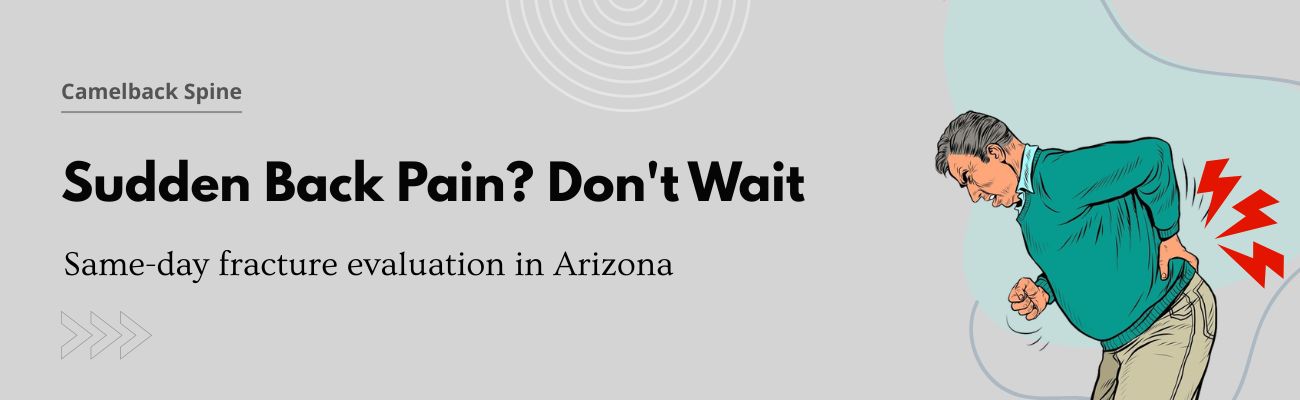
- Sudden, sharp back pain after a minor fall or routine movement
- Pain that worsens when standing or walking and eases when lying down
- Limited motion and trouble bending or twisting
- Loss of height over time
- A rounded, stooped posture (kyphosis)
- Pain that wraps around the ribs or abdomen
Sudden Back Pain in Elderly Patients: When to Seek Urgent Care
- Numbness, tingling, or weakness in the legs
- Loss of bladder or bowel control
- Severe pain after major trauma, such as a car accident
- Fever or unexplained weight loss
How Compression Fractures Are Diagnosed
- X-rays to show a collapsed or wedge-shaped vertebra
- MRI to confirm whether the fracture is recent and to check nearby nerves
- CT scan for detailed images of bone structure
- DEXA scan (bone density test) to measure how advanced osteoporosis is
Osteoporotic Compression Fracture Treatment: Conservative Options
Not every fracture needs a procedure. Osteoporotic compression fracture treatment often begins with conservative care for stable fractures:
- Short-term pain medication
- A supportive back brace
- Activity changes and gentle movement
- Physical therapy to strengthen the back and improve balance
- Treatment for the underlying disease, including calcium, vitamin D, and bone-strengthening medication
This approach is part of broader spine pain management, and many patients improve within several weeks. If pain stays severe, limits walking, or fails to improve, a procedure may be the better path.
How Works Balloon Kyphoplasty
Balloon kyphoplasty is a minimally invasive, outpatient spine procedure designed for painful osteoporotic fractures. As a form of minimally invasive spine surgery in Phoenix, Peoria, Goodyear, AZ, it uses a very small incision rather than open surgery. The steps are:
- Small incision: A thin tube is guided to the fractured vertebra through a tiny opening in the back, using real-time X-ray imaging.
- Balloon inflation: A small balloon is inflated inside the collapsed bone, creating space and supporting vertebral height restoration.
- Bone cement stabilization: The balloon is removed, and medical-grade bone cement fills the cavity and hardens, stabilizing the vertebra.
The procedure often takes under an hour per level, and many patients go home the same day. Many report meaningful relief within days, though results vary.
Benefits of Balloon Kyphoplasty
- Rapid pain relief for many patients
- Can help restore vertebral height and reduce spinal deformity
- Smaller incision and less tissue disruption than open surgery
- Quicker return to daily activities
- Typically performed on an outpatient basis
Kyphoplasty is not right for everyone. Imaging is used to confirm a recent painful fracture that matches your symptoms before it is recommended.
Kyphoplasty vs Vertebroplasty: What's the Difference?
Patients often ask about kyphoplasty vs vertebroplasty. Both are minimally invasive procedures that use bone cement to stabilize a fractured vertebra. The key difference is the balloon. In kyphoplasty, a balloon first creates space and can help restore height before cement is placed. In vertebroplasty, cement is injected directly into the fractured bone. Your specialist will recommend the better fit based on the fracture's age, shape, and location.
Osteoporosis Back Pain Relief: Recovery and Preventing Future Fractures
After kyphoplasty, most people resume light activity within a day or two. Your care team will give personalized instructions, which generally include gradual walking, avoiding heavy lifting early on, and follow-up visits.
Lasting osteoporosis back pain relief also means treating the cause, because new fractures are common if bone loss continues. A complete plan may include:
- Bone density treatment and regular DEXA monitoring
- Adequate calcium and vitamin D
- Weight-bearing exercise and balance training
- Home fall-prevention changes, such as better lighting and removing loose rugs
- Quitting smoking and limiting alcohol
Vertebral Fracture Treatment in Phoenix, Peoria, Goodyear
FAQs:
1. What does compression fracture back pain feel like?
Compression fracture back pain is usually a sudden, sharp pain in the middle or lower back that worsens when standing, walking, or bending and eases when lying down. Some people also notice height loss, a hunched posture, or pain that wraps around the ribs or abdomen.2. Can a spinal compression fracture heal on its own?
Many stable compression fractures heal in about 8 to 12 weeks with rest, bracing, pain management, and treatment of osteoporosis. Severe or persistent pain, repeated fractures, or increasing spinal curvature may call for treatment such as balloon kyphoplasty.3. How long does recovery take after balloon kyphoplasty?
Balloon kyphoplasty is typically an outpatient procedure lasting under an hour, and most patients go home the same day. Many resume light activity within a day or two and notice pain relief within days, though individual recovery varies.4. What is the difference between kyphoplasty and vertebroplasty?
Both procedures inject bone cement to stabilize a fractured vertebra. Kyphoplasty first inflates a balloon to create space and help restore vertebral height, while vertebroplasty injects cement directly into the fractured bone.5. When should an older adult see a doctor for sudden back pain?
See a doctor promptly if sudden back pain follows a minor fall, worsens when standing, or lasts more than a few days, especially with osteoporosis or age over 50. Seek emergency care for leg weakness, numbness, or loss of bladder or bowel control.Published on 01 Oct, 2026