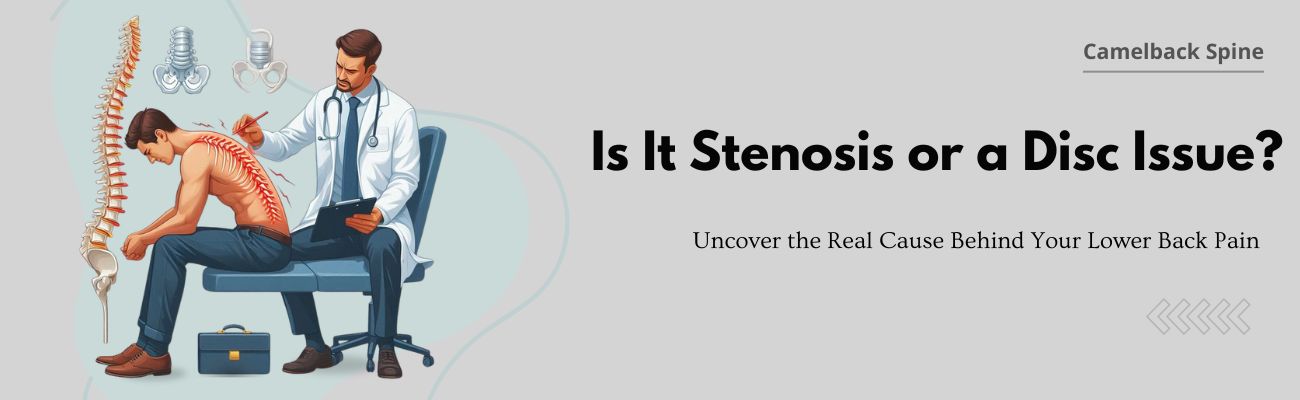
Waking up with persistent lower back pain transforms every daily task into an agonizing chore. Whether it is a sharp shock down your leg when sitting or a dull ache that grows while walking around the grocery store, living with a painful back condition robs you of your quality of life and leaves you desperately searching for clear answers. Over 15 years of evaluating clinical patient pathways and analyzing spine health outcomes, I have observed that thousands of individuals suffer needlessly simply because they mistake one spinal root cause for another. In this comprehensive guide, you will learn how to identify key physical triggers, evaluate unique symptom patterns, and understand the core structural differences between spinal stenosis and back disc issues.
Anatomy of the Lumbar Spine
To understand why your spine hurts, it helps to view your lower back as a delicate mechanical structure. Your lumbar spine consists of stacked bones (vertebrae) separated by rubbery cushions known as intervertebral discs. Running directly through the center of these bones is the spinal canal, a protective pathway housing your spinal cord and radiating nerve roots.
When every component is healthy, these shock-absorbing discs allow you to bend, twist, and flex without friction. However, structural wear or sudden mechanical strain disrupts this equilibrium:
- Intervertebral Discs: Composed of a tough outer fibrous ring (annulus fibrosus) and a jelly-like center (nucleus pulposus).
- Spinal Canal: The primary vertical passageway carrying central nerves from the brain stem down into the lower extremities.
- Neural Foramina: Small side exit windows where individual nerve roots leave the spine to serve your legs and hips.
When structural changes alter these pathways, persistent back pain develops. The exact location of the mechanical compression dictates whether your condition stems from localized disc damage or generalized canal narrowing.
What Are Back Disc Issues?
The term "disc issues" encompasses structural damage to the cushions situated between your spinal bones. This category predominantly includes bulging discs, herniated discs, and degenerative disc disease.
1. Bulging vs. Herniated Discs
A bulging disc occurs when the outer wall weakens, allowing the disc to protrude outward evenly like a slightly deflated tire. A herniated disc (often called a slipped or ruptured disc) happens when the tough outer layer cracks, permitting the inner jelly material to leak out and directly irritate neighboring spinal nerves.
2. Common Causes of Disc Damage
- Heavy lifting with improper biomechanics or sudden rotational movement.
- Repetitive physical strain from bending or heavy manual exertion.
- Age-related dehydration, which causes discs to lose height and shock absorption.
3. Key Symptoms of Disc Conditions
- Position-Based Aggravation: Pain typically intensifies when sitting, bending forward, or coughing, as these actions increase pressure within the disc.
- Sharp, Radiating Nerve Sensations: Compression often causes sudden, shooting pain (sciatica) down one leg.
- Rapid Onset: Symptoms frequently surface quickly following a specific physical effort or awkward bending motion.
What Is Spinal Stenosis?
While back disc issues center around the breakdown of individual intervertebral cushions, spinal stenosis refers to a progressive narrowing of the spaces within your spine. This structural constriction creates direct pressure on the spinal cord and exiting nerve roots.
1. Central vs. Foraminal Stenosis
- Central Stenosis: Narrowing occurs inside the main spinal canal, squeezing the central nerve bundle.
- Foraminal Stenosis: Narrowing develops in the side exit passages (foramina), compressing specific individual nerve roots.
2. Primary Causes of Stenosis
- Osteoarthritis and Bone Spurs: Decades of wear cause joints to enlarge, forming extra bone growth (osteophytes) that projects into the spinal canal.
- Ligament Thickening: Structural ligaments along the spine can stiffen and expand over time, taking up valuable canal space.
- Degenerative Changes: Chronic loss of disc height brings adjacent vertebrae closer together, narrowing nerve exit openings.
3. Hallmark Symptoms of Spinal Stenosis
- Extension Pain: Discomfort worsens when standing upright or leaning backward, which naturally tightens the spinal canal.
- Flexion Relief: Leaning forward (such as pushing a shopping cart) opens up the canal and provides fast, temporary relief.
- Neurogenic Claudication: Heavy, aching weakness or cramping in both legs that sets in after walking for short distances.
Key Differences: Spinal Stenosis vs Disc Issues
Distinguishing between these conditions comes down to observing when your symptoms flare up and what physical postures provide comfort. Medical teams at top research institutions like the National Institutes of Health (NIH) utilize these diagnostic benchmarks during clinical exams.
- Typical Demographics: Disc issues primarily affect adults aged 20 to 50 due to mechanical strain or sudden movement. In contrast, spinal stenosis predominantly develops in adults aged 50 and older as a result of long-term arthritic changes.
- Onset of Symptoms: Back disc issues often surface suddenly following a specific physical lift or awkward bend. Spinal stenosis usually develops gradually over months or years, progressing so slowly that individuals barely notice the initial changes.
- Impact of Forward Bending: Bending forward increases pressure inside intervertebral discs, which typically worsens pain from a disc bulge or herniation. For spinal stenosis, bending forward expands the spinal canal dimensions and immediately relieves nerve compression.
- Impact of Sitting: Sitting down increases intradiscal pressure, making it an uncomfortable position for people with disc conditions. Conversely, sitting reduces spinal extension and gives quick comfort to those living with spinal stenosis.
- Walking and Standing Tolerances: Individuals with disc issues often feel better while walking or moving around compared to sitting still. Those with spinal stenosis usually experience progressive leg heavying, cramping, or weakness after standing or walking for short periods.
- Localization of Symptoms: Disc herniations typically compress a single nerve root, sending sharp pain or numbness down just one leg. Spinal stenosis narrows central pathways, frequently affecting both legs simultaneously.
Self-Check: Tracking Your Symptom Patterns
While only advanced diagnostic imaging can provide a definitive medical diagnosis, paying close attention to daily patterns helps clarify your condition:
The "Shopping Cart" Test
Notice what happens when you walk through a store. If you instinctively lean forward over a shopping cart handle to relieve aching leg pain, you are displaying a classic sign of spinal stenosis. Leaning forward expands the lumbar canal dimensions. Conversely, if leaning over the cart increases sharp lower back discomfort, a herniated or bulging disc is far more likely.
The Seated Position Test
Pay attention to how your back reacts when sitting in a chair. Individuals with disc issues usually experience escalating discomfort after sitting for 15–30 minutes because sitting exerts high mechanical load on lumbar discs. People suffering from stenosis generally find sitting to be the most comfortable position of the day.
When to Visit Spine Specialist Near You
Most spine conditions respond well to conservative non-surgical care when caught early. However, certain neurological red flags demand immediate emergency medical evaluation to prevent permanent nerve damage. Consult a physician promptly if you experience:
- Sudden loss of bowel or bladder control (incontinence or retention).
- Progressive numbness or weakness in your inner thighs and groin area ("saddle anesthesia").
- Rapidly escalating motor weakness, such as being unable to lift your foot while walking (foot drop).
- Severe, unremitting back pain accompanied by unexplained fever or sudden weight loss.
Diagnostic Tools and Modern Treatment Options
Accurate identification of spinal pathology relies on objective medical evaluation. Spine experts use structured diagnostic steps to confirm the underlying cause:
- Clinical Physical Exam: Testing deep tendon reflexes, skin sensation, muscle strength, and straight-leg raise responses.
- Magnetic Resonance Imaging (MRI): The gold standard visual technique for revealing soft tissues, including nerve compression, disc herniations, and canal width.
- Computed Tomography (CT) Scans: Provides clear visual detail of bony spur growth and arthritic joint changes.
Once diagnosed, conservative management serves as the primary treatment path. Structured physical therapy, anti-inflammatory support, guided epidural steroid injections, and targeted core strengthening resolve the vast majority of symptomatic flares without requiring invasive surgery.
FAQs:
1. How can you tell if back pain is disc or muscle?
Disc pain often radiates down the legs with numbness or sharp tingling and worsens during bending or sitting. Muscle strain remains localized in the lower back, causing dull aching or spasms that improve within a few days of rest.2. Does spinal stenosis feel different than a herniated disc?
Yes, spinal stenosis causes leg cramping and heaviness while walking or standing upright, which eases upon leaning forward. A herniated disc usually triggers sharp, sudden nerve pain down one leg that worsens when sitting or bending forward.3. Can you have spinal stenosis and a herniated disc at the same time?
Yes, individuals can experience both conditions simultaneously. Age-related narrowing of the spinal canal (stenosis) combined with an acute disc herniation can compound nerve compression, requiring a comprehensive medical evaluation to target both structural issues effectively.4. What is the best sleeping position for lower back pain relief?
Sleeping on your side with a pillow tucked between your knees maintains proper spinal alignment and alleviates pressure. Alternatively, sleeping on your back with a pillow under your knees reduces stress on the lumbar spine and intervertebral discs.5. Will spinal stenosis or disc issues heal without surgery?
Most disc issues and mild-to-moderate spinal stenosis symptoms improve without surgery. Targeted physical therapy, anti-inflammatory treatments, lifestyle adjustments, and core strengthening exercises successfully manage nerve compression and restore functional mobility for the majority of patients.Published on 05 Aug, 2026