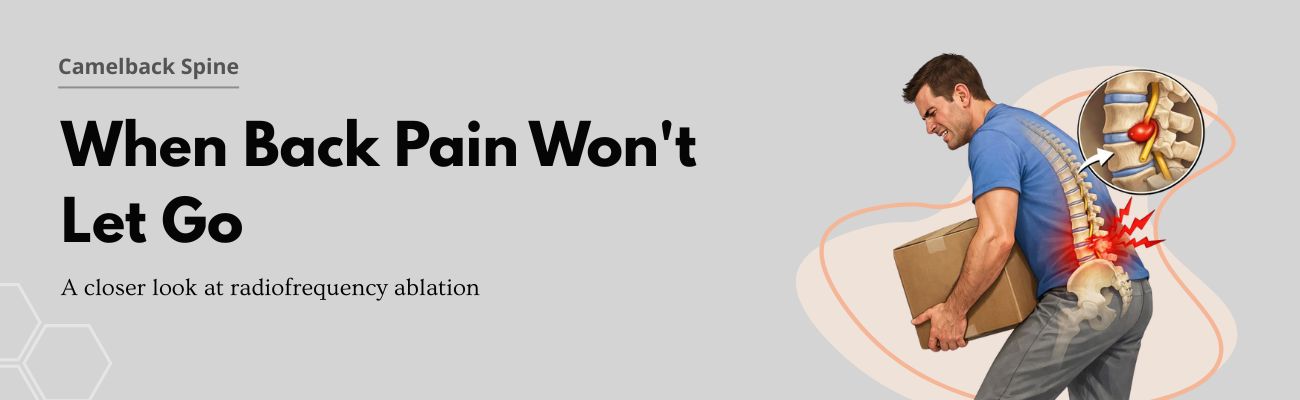
If you've ever laid awake at 3 a.m. because your lower back wouldn't let you find a comfortable position, you already know that chronic back pain isn't just physical. It wears down your patience, your mood, and your ability to simply live your day without calculating every movement first. For millions of Americans, pills and rest only go so far, and that's usually when a doctor starts talking about radiofrequency ablation for back pain.
Having worked alongside pain management specialists who perform this procedure regularly, I've seen how much relief and confusion it can bring in equal measure. Patients want to know if it actually works, how long it lasts, and what recovery really looks like not the sanitized version. This guide breaks down radiofrequency ablation (RFA) in simple words, so you can have an informed conversation with your own doctor.
What Is Radiofrequency Ablation for Back Pain?
Radiofrequency ablation for back pain is a minimally invasive medical procedure that uses heat generated by radio waves to stop specific nerves from sending pain signals to the brain. Rather than masking pain with medication, RFA targets the actual nerve pathway responsible for chronic discomfort. According to the Cleveland Clinic, this treatment is also called radiofrequency neurotomy, and it's commonly recommended for people with long-term back, neck, or arthritic joint pain who haven't found lasting relief through physical therapy or medication alone.
RFA doesn't cure the underlying cause of back pain. Instead, it interrupts the pain signal itself, which can make daily activities more manageable while other treatments, like physical therapy, continue working in the background.
Who Is a Candidate for Radiofrequency Ablation?
Not everyone with back pain qualifies for this procedure. Doctors typically consider radiofrequency ablation for patients who:
- Have chronic low back pain lasting three months or longer
- Experience pain linked to the facet joints or sacroiliac joints
- Already tried conservative treatments like physical therapy, anti-inflammatory medications, or steroid injections
- Responded well to a diagnostic nerve block (a temporary numbing injection used to confirm the pain source)
That last point matters. Most pain specialists won't perform RFA unless a diagnostic medial branch block has already confirmed which nerve is causing the pain. Skipping this step is one of the most common reasons a procedure fails to deliver results.
How the Radiofrequency Ablation Procedure Works
Understanding the mechanics of the procedure can ease a lot of pre-treatment anxiety. Here's what typically happens, step by step.
1. Positioning and Numbing
You'll lie face down on a procedure table, and the treatment area is cleaned and numbed with a local anesthetic. Some clinics offer light sedation, though most patients remain awake and alert throughout.
2. X-Ray Guidance
The physician uses a specialized X-ray machine called fluoroscopy to guide a thin needle precisely to the nerve responsible for the pain. This imaging step is what makes radiofrequency ablation for back pain so targeted compared to older, less precise nerve treatments.
3. Nerve Confirmation
Before any heat is applied, a small electrical current is sent through the needle. This confirms the needle tip is touching the exact nerve causing the pain, not a nearby structure.
4. Heat Application
Once the nerve is confirmed, radiofrequency energy heats the needle tip and creates a small, controlled lesion on the nerve. This disables the nerve's ability to transmit pain signals, typically for six months to two years, since nerves can gradually regenerate over time.
The entire outpatient procedure usually takes 30 to 90 minutes, depending on how many nerve levels are being treated, and most patients go home the same day.
Benefits of Radiofrequency Ablation
Chronic back pain doesn't just hurt physically, it limits what you can do and how independent you feel. RFA offers several advantages worth understanding before deciding if it's right for you.
- Long-lasting relief: Many patients experience pain reduction lasting six months to two years, sometimes longer, before the nerve regenerates.
- No major surgery required: RFA is performed as an outpatient procedure using only local anesthesia or light sedation, so there's no lengthy hospital stay.
- Reduced medication dependence: Because RFA targets pain signals directly, some patients are able to reduce reliance on daily oral pain medication.
- Improved daily function: Less pain often translates into better mobility, improved sleep, and an easier time completing everyday tasks.
- Quick return to routine: Compared to spinal surgery, recovery time is dramatically shorter.
Risks and Side Effects of Radiofrequency Ablation
No medical procedure is entirely without risk, and RFA is no exception. Most side effects are mild and temporary, but it's worth knowing the full picture.
- Soreness at the injection site: Mild swelling, bruising, or a burning sensation near the needle site is common for a few days.
- Temporary numbness: Some patients notice numbness or tingling in the treated area that resolves on its own.
- Rare complications: Infection, bleeding, or lasting nerve irritation are uncommon but possible, which is why choosing an experienced, board-certified pain specialist matters.
- Incomplete relief: Not every patient responds the same way, and some may not experience significant pain reduction.
If you notice fever, increasing pain, or unusual symptoms after the procedure, contact your physician promptly rather than waiting it out.
Recovery After Radiofrequency Ablation
Recovery from radiofrequency ablation for back pain is generally faster and easier than most people expect, especially compared to spinal surgery.
- Day of the procedure: Rest for the remainder of the day. Applying an ice pack to the treatment area can help with soreness.
- First 24 to 48 hours: Most patients return to light daily activities within one to two days, though some soreness is normal during this window.
- First week: Full pain relief can take up to a week to set in, as the nerve lesion needs time to fully take effect.
- Avoiding strain: Heavy lifting, intense exercise, and high-impact activity should be avoided for several days following the procedure.
- Follow-up care: Doctors often recommend gentle stretching or physical therapy shortly after recovery to help maintain and extend the pain relief.
It's worth noting that RFA is not typically a one-time fix. Since treated nerves can regenerate, some patients need repeat procedures every six to twelve months to maintain results.
How Radiofrequency Ablation Compares to Other Back Pain Treatments
Patients often ask how RFA stacks up against other options they've already tried or considered.
- Versus oral pain medication: Medication treats pain systemically and can carry side effects with long-term use. RFA targets the pain source directly at a specific nerve.
- Versus steroid injections: Injections usually offer shorter-term relief, often weeks to a few months, while RFA relief tends to last considerably longer.
- Versus spinal surgery: Surgery involves a longer recovery, higher risk profile, and is typically reserved for structural problems like herniated discs or spinal instability, whereas RFA addresses nerve-based pain without cutting into the spine itself.
Every case is different, and the right treatment path depends on the specific cause of your back pain, which only a qualified physician can determine after proper imaging and diagnostic testing.
Living with chronic back pain can feel like waiting for a solution that never quite arrives. Radiofrequency ablation isn't a miracle cure, but for the right candidate, it can offer real, measurable relief without the risks and downtime of major surgery. If your back pain has been resistant to medication, physical therapy, or injections, it may be worth discussing radiofrequency ablation with a licensed pain management specialist to see if you're a good candidate.
FAQs:
1. How long does radiofrequency ablation relief last for back pain?
Radiofrequency ablation relief typically lasts between six months and two years, depending on the individual patient. Pain often returns gradually as the treated nerve regenerates over time. Some patients need repeat procedures to maintain long-term pain control and mobility.2. Is radiofrequency ablation for back pain painful?
Most patients report only mild discomfort during radiofrequency ablation, since the treatment area is numbed with local anesthesia beforehand. Some soreness or burning may occur at the needle site afterward. This typically resolves within a few days without further treatment.3. How long is recovery after radiofrequency ablation?
Recovery after radiofrequency ablation is generally quick, with most patients returning to light activities within 24 to 48 hours. Full pain relief can take up to a week to develop fully. Heavy lifting and strenuous activity should be avoided for several days.4. What are the risks of radiofrequency ablation for back pain?
Common risks include temporary soreness, swelling, and numbness at the treatment site. Rare complications include infection, bleeding, or lasting nerve irritation. Choosing an experienced, board-certified pain specialist significantly reduces the likelihood of complications occurring.5. Who is a good candidate for radiofrequency ablation?
Good candidates typically have chronic back pain lasting three months or longer, linked to facet or sacroiliac joints. Candidates should have already tried conservative treatments and responded positively to a diagnostic nerve block confirming the pain source before treatment.Published on 27 Jul, 2026