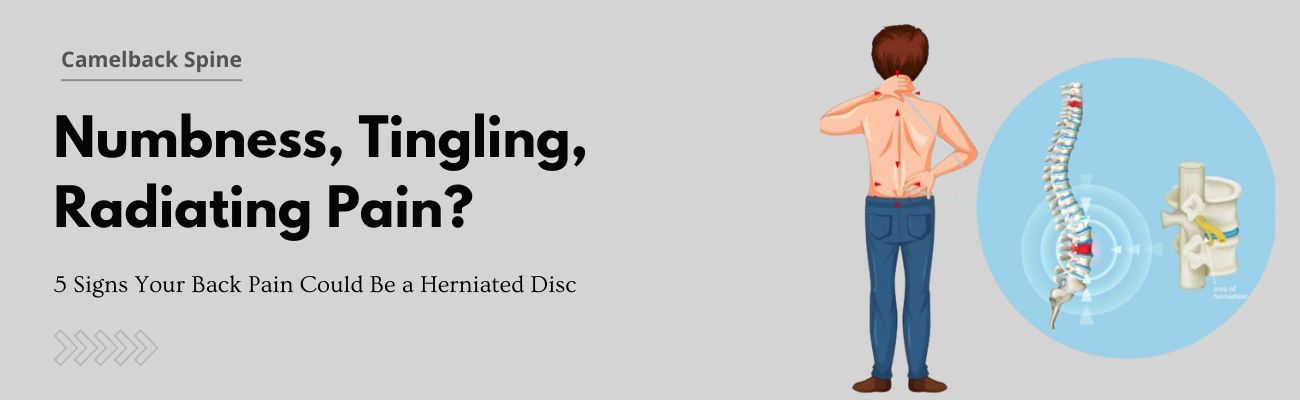
Back pain is so common that it's easy to brush off a bad night's sleep, one too many hours at your desk, or "just getting older." But when pain starts radiating down your leg, or your arm goes numb for no clear reason, it might be pointing to something more specific: a herniated disc.
Knowing the signs of a herniated disc early can make a real difference in how quickly and how completely you recover. In this guide, we'll walk through the five most common warning signs, the symptoms herniated disc sufferers often dismiss for too long, and exactly when it's time to see a spine specialist.
What Is a Herniated Disc?
Your spine is cushioned by soft, gel-like discs between each vertebra that absorb shock and allow flexibility. A herniated disc (sometimes called a slipped or ruptured disc) occurs when the soft inner material pushes through a crack in the disc's tougher outer layer.
When that happens, the disc can press on nearby nerves, which is where most noticeable symptoms come from. Herniated discs are most common in the lower back (lumbar spine) and neck (cervical spine), though they can occur anywhere along the spinal column.
5 Common Signs of a Herniated Disc You Shouldn't Ignore
Not every backache means you have a herniated disc, but these five signs of disc herniation are worth paying close attention to especially if more than one shows up at the same time.
1. Radiating Pain Down an Arm or Leg
One of the clearest signs of a herniated disc is pain that doesn't stay in one place. If a disc in your lower back is affected, you may feel a sharp, burning, or aching pain that travels from your lower back through your buttock and down one leg a pattern often referred to as sciatica. A herniated disc in the neck can send similar pain down the shoulder and arm.
2. Numbness or Tingling
When a herniated disc presses on a nerve, it can interrupt normal nerve signals, causing numbness or a "pins and needles" sensation. This typically follows the same path as the radiating pain down the leg, into the foot, or along the arm and into the fingers.
3. Muscle Weakness
Nerve compression doesn't just affect sensation; it can affect muscle function too. You might notice your leg feels less stable, you're stumbling more than usual, or you're having trouble gripping objects if the herniation is in your neck. Unexplained weakness is one of the more serious symptoms of a herniated disc and shouldn't be ignored.
4. Pain That Worsens With Certain Movements
Sitting, bending, coughing, or sneezing can all increase pressure on the affected disc, often making symptoms noticeably worse. Many people with a herniated disc find that pain intensifies after long periods of sitting and improves somewhat when standing or lying down.
5. Pain That Improves in Certain Positions
On the flip side, one of the more telling signs of disc herniation is pain that eases when lying flat or shifting into a specific position. This positional pattern worse with sitting, better when reclining is a hallmark that distinguishes disc-related pain from general muscle strain.
Other Symptoms of a Herniated Disc That Are Often Overlooked
Beyond the five primary warning signs, a herniated disc can also cause:
- A dull, persistent ache localized to the lower back or neck
- Muscle spasms near the affected area
- Reduced range of motion when bending or turning
- In severe cases, changes in bladder or bowel control (a medical emergency requiring immediate care)
If you notice any loss of bladder or bowel control alongside back pain, seek emergency medical attention right away this can indicate a rare but serious condition called cauda equina syndrome.
What Causes a Herniated Disc?
Understanding what leads to disc herniation can help you recognize risk factors in your own life:
- Age-related wear and tear: Discs lose water content and flexibility over time, making them more prone to tearing.
- Repetitive strain: Jobs or activities involving frequent bending, twisting, or heavy lifting increase pressure on spinal discs.
- Sudden injury: A fall, car accident, or awkward lifting motion can cause immediate herniation.
- Genetics: Some people are simply more predisposed to disc problems due to family history.
- Excess body weight: Added weight increases the load placed on the lower spine over time.
- Sedentary lifestyle: Weak core and back muscles offer less support to the spine, increasing vulnerability to injury.
When to See a Spine Specialist for Herniated Disc Symptoms
Mild disc-related discomfort sometimes improves with rest, gentle movement, and over-the-counter pain relief. But you shouldn't wait to get evaluated if you experience:
- Pain that radiates into your arm or leg and doesn't improve after a week or two
- Numbness, tingling, or weakness that's getting worse rather than better
- Pain that interferes with daily activities, sleep, or work
- Any loss of bladder or bowel control (seek emergency care immediately)
- Recurring episodes of back or neck pain that keep coming back
The earlier a herniated disc is properly diagnosed, the more treatment options are typically available, many of which are non-surgical.
How Camelback Spine Diagnoses and Treats Herniated Discs
At Camelback Spine, our orthopedics and spine specialists take a thorough, personalized approach to identifying and treating disc herniation. Diagnosis typically involves a detailed physical exam, a review of your symptoms and medical history, and imaging such as an MRI to confirm the location and severity of the herniation.
From there, treatment is tailored to your specific case and may include:
- Physical therapy and targeted exercise programs
- Anti-inflammatory and pain management strategies
- Epidural steroid injections for nerve-related pain
- Minimally invasive procedures for more advanced cases
- Surgical options when conservative treatment isn't enough
Most patients respond well to non-surgical treatment when symptoms are caught early, which is exactly why recognizing the signs of a herniated disc matters so much.
Radiating pain, numbness, and weakness aren't things to simply push through. If you're noticing any of the symptoms of a herniated disc described above, an accurate diagnosis is the fastest path to real relief.
Schedule a consultation with Camelback Spine today and take the first step toward understanding what's really going on with your spine and getting back to living without pain holding you back.
FAQs:
1. What are the most common signs of a herniated disc?
The most common signs include radiating pain down an arm or leg, numbness or tingling, muscle weakness, and pain that worsens with sitting or certain movements.2. Can a herniated disc heal without surgery?
Yes. Many cases of disc herniation improve with physical therapy, activity modification, and non-surgical treatments, especially when addressed early.3. How do I know if my back pain is a herniated disc or just a strain?
Muscle strain typically stays localized, while herniated disc symptoms often radiate into the arms or legs and may include numbness, tingling, or weakness that strain alone doesn't usually cause.4. What does herniated disc pain feel like?
It's commonly described as sharp, burning, or electric-like pain that travels along a nerve pathway, often accompanied by tingling or a dull ache in the back or neck.5. When should I see a doctor for symptoms of a herniated disc?
See a specialist if pain persists longer than one to two weeks, worsens over time, includes numbness or weakness, or interferes with daily activities.Published on 08 Sep, 2026